








Cappadocian cuisine
Testi Kebab (Pottery Kebab)
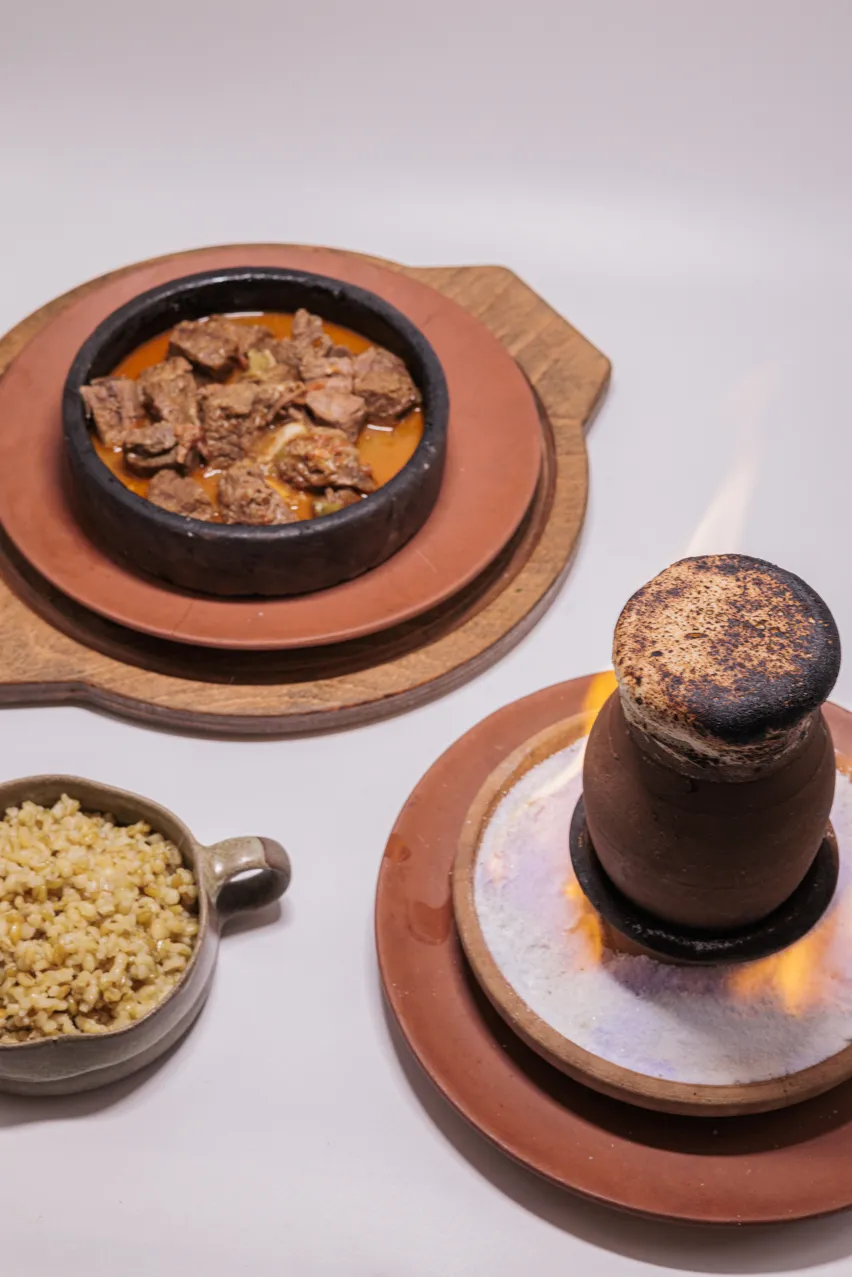
The dish nobody should leave Cappadocia without trying: beef tenderloin cooked in its own juices inside a sealed clay pot. We serve it with smoked freekeh pilaf on our terrace overlooking Göreme’s fairy chimneys.
1.900 TL
- Cuisine
- Cappadocian cuisine
- Served with
- Smoked freekeh pilaf
- Allergens
- Not listed on the menu, please ask
- Price
- 1.900 TL
What is testi kebab?
Testi kebab is a Central Anatolian dish made by packing meat and vegetables into a narrow-necked clay pot, sealing the opening and cooking it slowly. Because nothing escapes the sealed pot, the meat turns meltingly tender and the vegetables release their juices into a rich, natural sauce. Around Nevşehir, and in Cappadocia in particular, it is considered part of the region’s culinary identity.
The pot is part of the story too. Avanos, a few kilometres from Göreme, has been making pottery from the red clay of the Kızılırmak river for centuries. Clay pots were an everyday kitchen tool here, which goes a long way towards explaining why pottery kebab became such a fixture of Cappadocian tables.
How pottery kebab is traditionally cooked
In the traditional recipe, the meat and vegetables are layered into the pot with a little butter or water. The opening is sealed so that no steam can escape; in Anatolia this might be done with a piece of dough, a slice of potato or bread. The pot then goes into a wood-fired oven or among the hot embers of a tandır pit for several hours.
Clay spreads heat slowly and evenly, so the food inside never boils hard; it simmers gently. The long cooking breaks down the connective tissue in the meat, softens the vegetables without collapsing them and brings all their juices together into a single sauce. That patient, sealed cooking is what sets pottery kebab apart from an ordinary meat sauté.
Testi kebab or güveç: what is the difference?
Both are cooked in earthenware, which is why they are often confused. A güveç is a wide, shallow dish; the food cooks uncovered or under a loose lid and is served straight from the dish. A testi is a narrow-necked, sealed pot, and the food only appears once the pot is broken open.
The difference shows in the taste. In a güveç the surface browns slightly and the sauce reduces; in a testi nothing escapes, so the meat stays juicier and the sauce clearer and more aromatic. The sealed cooking and the moment of opening at the table are why, in Cappadocia, pottery kebab is seen as much as a piece of table theatre as a dish.
What goes into our pot
The heart of our recipe is diced beef tenderloin. Tenderloin is the least worked and most tender muscle of the animal, so it softens in the pot without falling apart into threads. Shallots, garlic, peppers and tomatoes go in alongside it, and everything cooks together in the same sealed pot, in each other’s juices.
It comes with smoked freekeh bulgur pilaf. Freekeh is wheat harvested while still green and then roasted over fire, which gives it a gentle smoky aroma. It is hard to think of a better partner for soaking up the sauce from the pot.
Ingredients
- Diced beef tenderloin
- Shallots
- Garlic
- Peppers
- Tomatoes
- Smoked freekeh bulgur pilaf
How the pot is opened
In Cappadocia, pottery kebab is traditionally opened at the table: the neck of the pot is tapped a few times with the back of a knife until the top comes away in one piece, and the stew is poured out onto the plate. That brief moment is easily the most photographed part of the meal.
The steam rises the instant the pot is opened, so we suggest taking your photo and starting straight away. Feel free to ask our team anything about how the dish is served when you order.
What to pair it with
Testi kebab is a hearty main course on its own. A light starter or salad beforehand and a red wine from Cappadocia’s vineyards alongside strike a good balance. Our list includes Kalecik Karası and Öküzgözü from Kocabağ in Uçhisar, as well as Côtes d’Avanos labels. If you prefer not to drink alcohol, our homemade ayran is the classic companion.
If you are saving room for dessert, the Cappadocian Pear is a lovely way to finish the meal with another local flavour.
When to fit pottery kebab into your Göreme trip
Days in Cappadocia tend to start early: a balloon flight at sunrise, then the valleys, the underground cities and the Göreme Open-Air Museum. After a day like that, a hearty, hot and truly local dinner hits the spot, which is why pottery kebab is mostly an evening dish.
Our terrace is in the centre of Göreme, so after a day of sightseeing you can walk over or arrive after a short drive. Watching the sunset from the terrace and then opening your pot is a fine way to end a day in Cappadocia.
A Cappadocian evening on the terrace
Cratus Premium Restaurant is a 90-seat terrace restaurant on the top floor of Cratus Stone Palace in Göreme. From here you can watch the balloons take off in the morning and the valley change colour in the late afternoon. We are open every day from 08:00 to 23:00; if you would like your pottery kebab to coincide with sunset, we recommend booking your table ahead.
Frequently asked questions
What meat is used in your testi kebab?
Ours is made with diced beef tenderloin, cooked together with shallots, garlic, peppers and tomatoes.
What is it served with?
It is served with smoked freekeh bulgur pilaf.
How much does the testi kebab cost?
The current price is 1.900 TL. Our prices are updated together with our QR menu.
Where is the restaurant?
We are on the top floor of Cratus Stone Palace in Göreme: Avcılar Mahallesi, Belediye Arkası No:11, Göreme / Nevşehir, Türkiye.
Do I need a reservation?
It is not required, but we recommend booking a terrace table in advance, especially around sunset. You can use the “Book a table” button on this page or message us on WhatsApp.
More signature dishes
-
 Anatolian and Ottoman cuisine
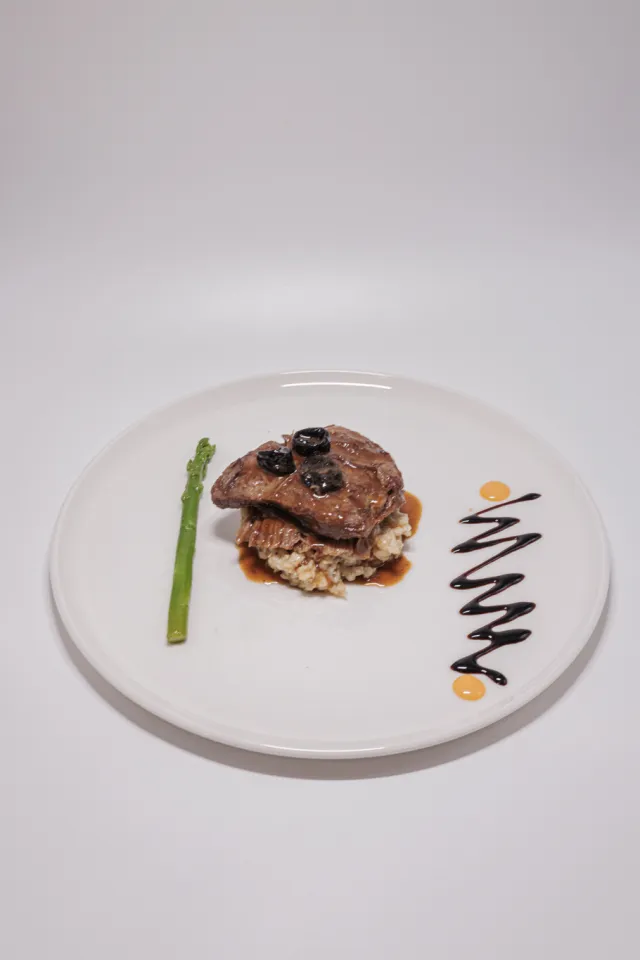
Slow-Cooked Beef Ribs with Damson Plums
Slow-cooked beef ribs with damson plums and keşkek.
Anatolian and Ottoman cuisine
Slow-Cooked Beef Ribs with Damson Plums
Slow-cooked beef ribs with damson plums and keşkek.
-
 Chinese cuisine · Sichuan
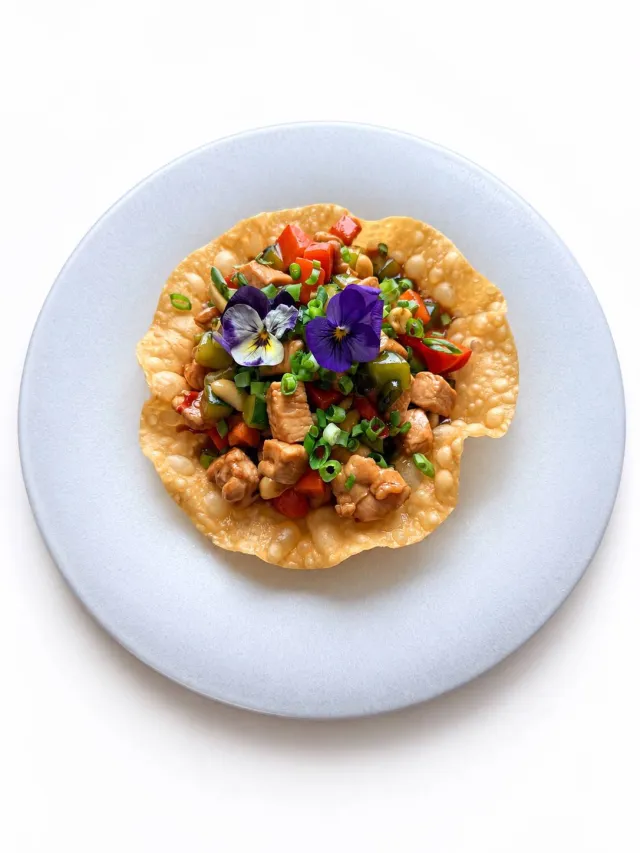
Kung Pao Chicken
Chicken stir-fried with garlic and isot pepper, peanuts and a glossy soy glaze.
Chinese cuisine · Sichuan
Kung Pao Chicken
Chicken stir-fried with garlic and isot pepper, peanuts and a glossy soy glaze.
-
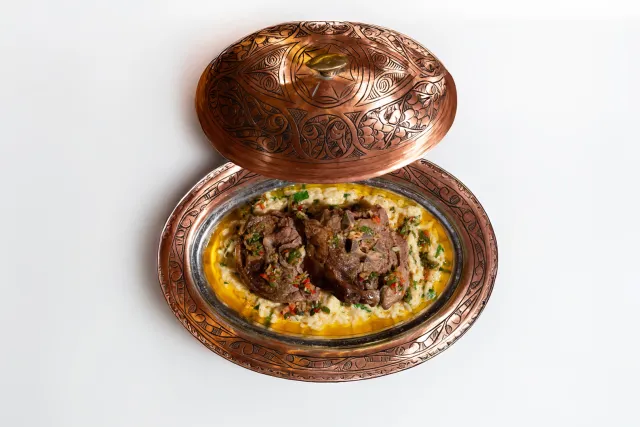 World cuisine
Gerdan-ı Sultan (Roasted Lamb Neck)
Oven-roasted lamb neck, çimuçiri sauce and orzo risotto.
World cuisine
Gerdan-ı Sultan (Roasted Lamb Neck)
Oven-roasted lamb neck, çimuçiri sauce and orzo risotto.
-
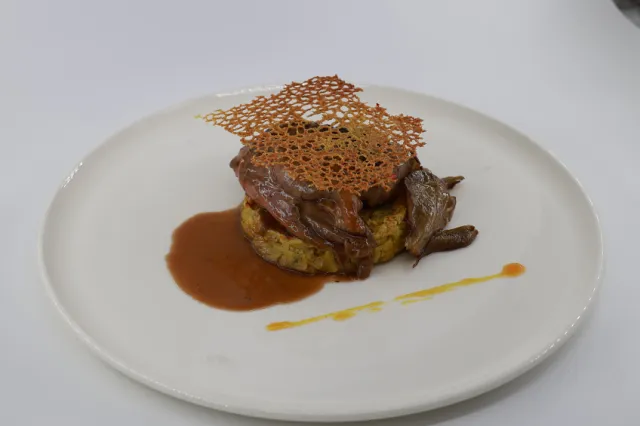 World cuisine
Lamb Shank
Glazed shank with bone sauce, mushrooms, potatoes and regional cheese.
World cuisine
Lamb Shank
Glazed shank with bone sauce, mushrooms, potatoes and regional cheese.
Your table on the terrace
Every day 08:00 – 23:00 · Göreme, top floor of Cratus Stone Palace · 90-seat terrace